Another Hole in the Head 2025 Coverage
The Killing Cell review
A found footage throwback with some fun ideas along the way.
Festival movie reviews will not contain spoilers.

The Killing Cell
Directed by James Bessey and Karsen Schovajsa
Written by James Bessey and Karsen Schovajsa
Starring Stephen Lamar Lewis, Erin Caitlin Collins, Jordan Whitley, James Bessey, LaMont Green, Tim J Doyle and Karsen Schovajsa
The Killing Cell Review
I sometimes wonder about the state of found footage films. There seem to be three major ways in which the concept is being utilized at this point. The most interesting movies are the ones that attempt to push the boundaries of what these types of movies can do. Deadstream and Late Night with the Devil, among others, have found new ways to present the idea. There are also movies like Shelby Oaks and the Horror in the High Desert franchise that make found footage just a part of the storytelling. These have been effective in brining back the feeling that what we’re watching is “real”. Two branches of the found footage tree focused on new ways to utilize said footage.
The third version is the one we see the most often in history…which makes it something of a choice this late into the filmmaking style’s life cycle. The throwback found footage movie. It’s a dicey proposition because it involves committing your format to the exact type of found footage films that everyone got tired of in the first place. Movies that don’t attempt to innovate or push boundaries…but, instead, embrace the original, simplistic point of the concept. Craft a story around a reason that this footage exists and stick to it unwaveringly.
Of course, most productions choose the format because they simply can’t afford to shoot in a different way. Plenty of independent horror films have turned towards found footage to keep costs down. Some good comes out of it…mostly that more voices get a turn at the mic. The Killing Cell almost certainly incorporates some of that by necessity…but it’s really working within the third concept. Like recent releases Dream Eater and House on Eden…it comes up with a reason to turn on a camera…and tries to work creatively within the limits established years before. The results fall somewhere between those two examples. Perhaps its ultimate success lies in a memorial card at the end of the film celebrating the fact that they went out and made a movie. That’s the true spirit of the format, after all.
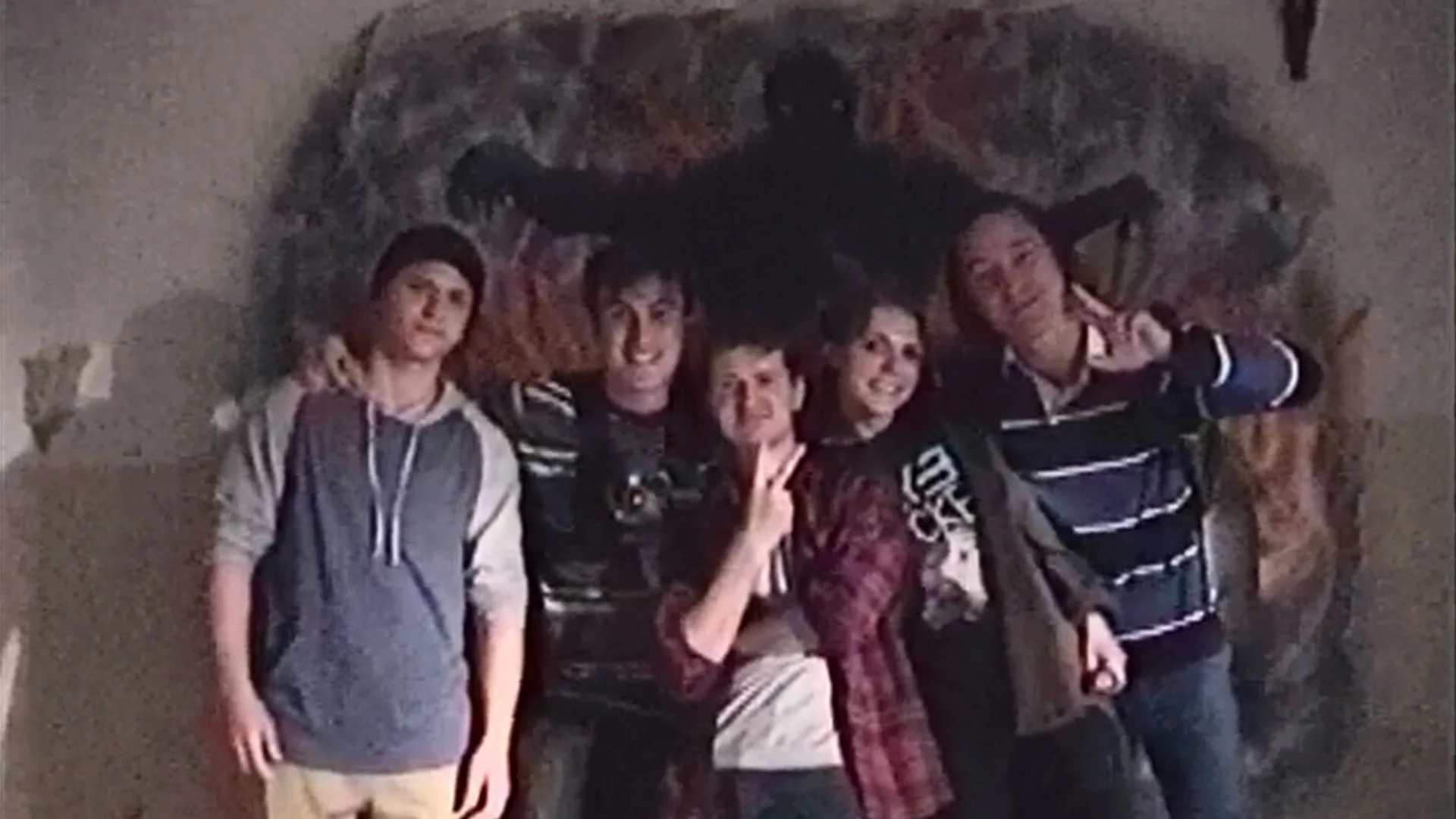
Five friends head to an abandoned penitentiary to find out if it is as haunted as the legend says. They don’t find the supernatural based ghosts one would expect from this type of story. Instead, they come across flesh and blood violence…including a group of naked people locked inside the cells. They beg to be freed before “the warden” returns.
The story takes place in 2006…further committing itself to the throwback idea. It’s a lot of shaky camera’s lighting darkened hallways. We spend the middle of the film following two of the five characters as they investigate the strange building. Eventually, the violence comes for all of them. There are some strong practical effects when The Killing Cell turns gory. A pretty wild climax is on tap too…for those who can handle the long stretches of waiting for things to happen. That’s one of the calling cards of the subgenre. I suspect it won’t be an issue to anyone familiar with found footage movies.
The characters feel realistic enough…a necessity for these types of films. Trading in supernatural threats for a human one is a great choice too. Even better are the period accurate cameras creating a true throwback feeling. These aren’t innovations…these are creative wins within a structure. It’s why we can still get effective found footage films that innovate within a concept instead of trying to innovate on one. It’s a high wire act to be sure. Many found footage movies falter because they miss the necessary things. The Killing Cell gets that stuff right enough to stay above water. There are a few points where you’d like a bit more to happen…a little deeper mystery…a couple more discoveries. Overall, though, The Killing Cell is a solid throwback to what found footage could do. And a great representation of why it remained relevant over time. It allows more people to make a real movie.
Scare Value
The Killing Cell is a good reminder that the found footage concept still delivers on its most important promise. It allows anyone to make a movie. Obviously, that comes with a lot of flawed productions that give the format a bad name. But there are also great innovations on the concept…and strong stories told from firmly within it. The Killing Cell isn’t a perfect movie…but it does have some fun and creative ideas to present. Throw in a bit of gore and a legitimate (instead of implied) threat…and you’ve got something.